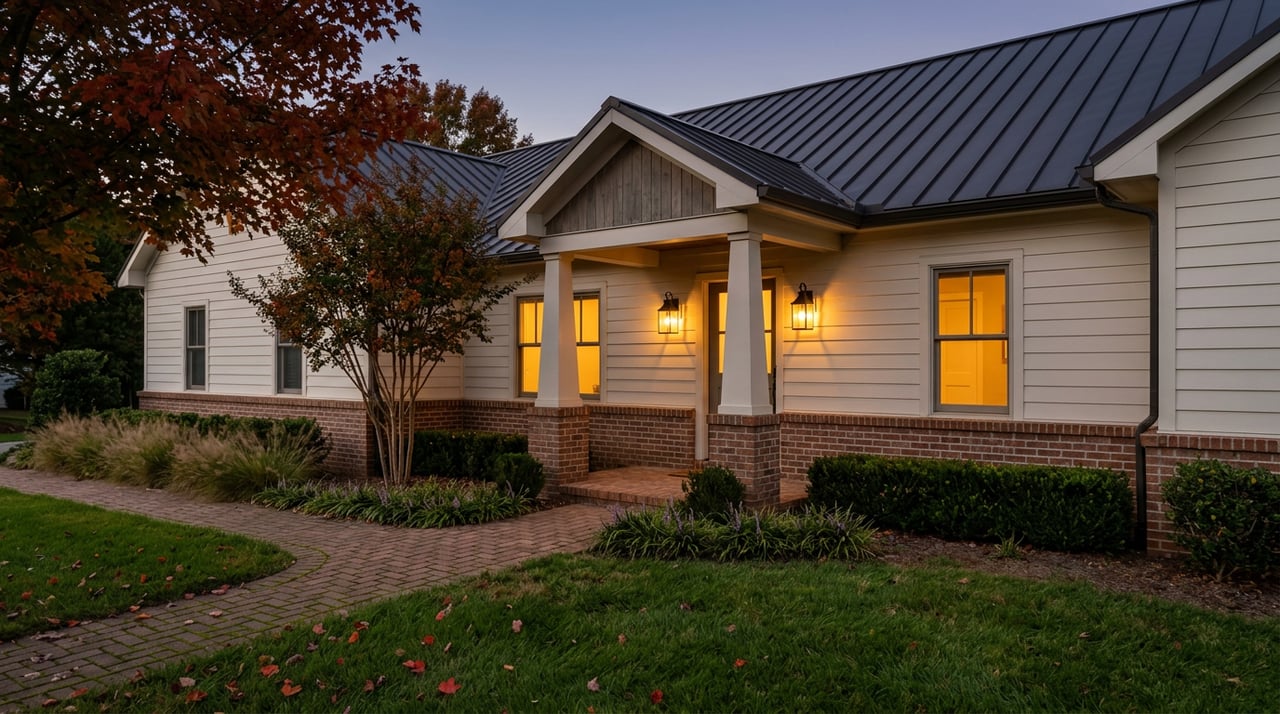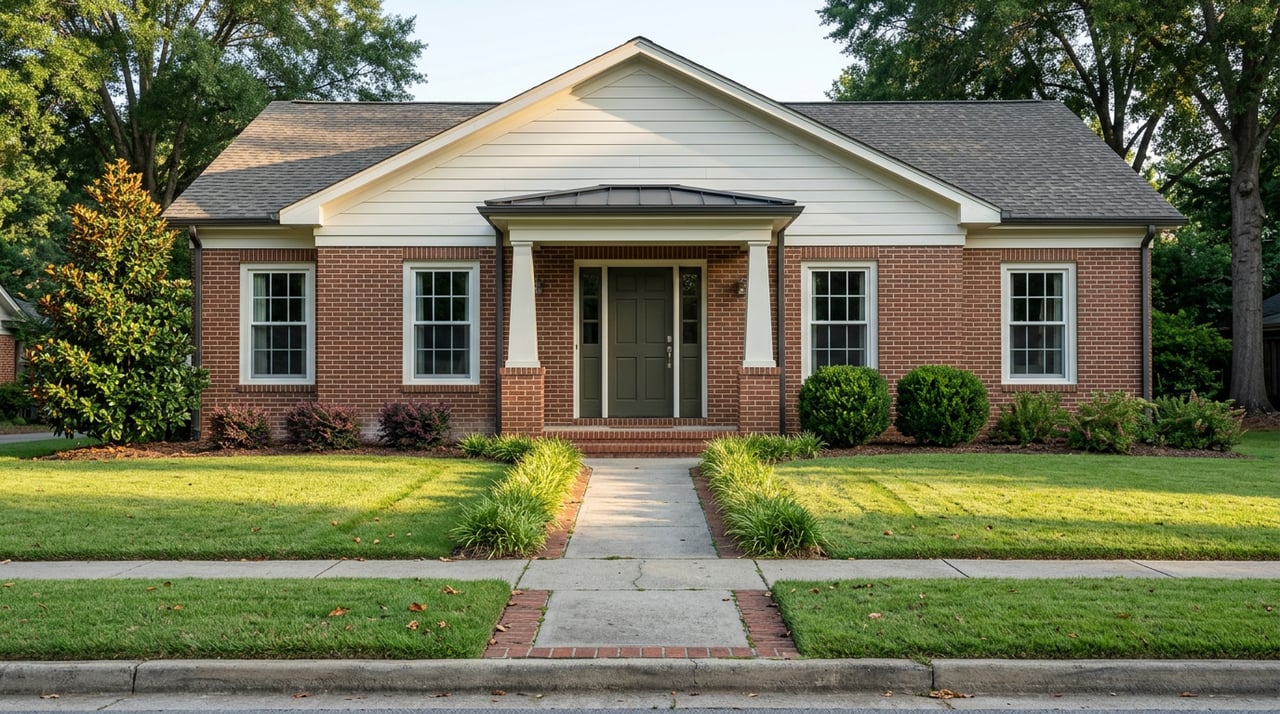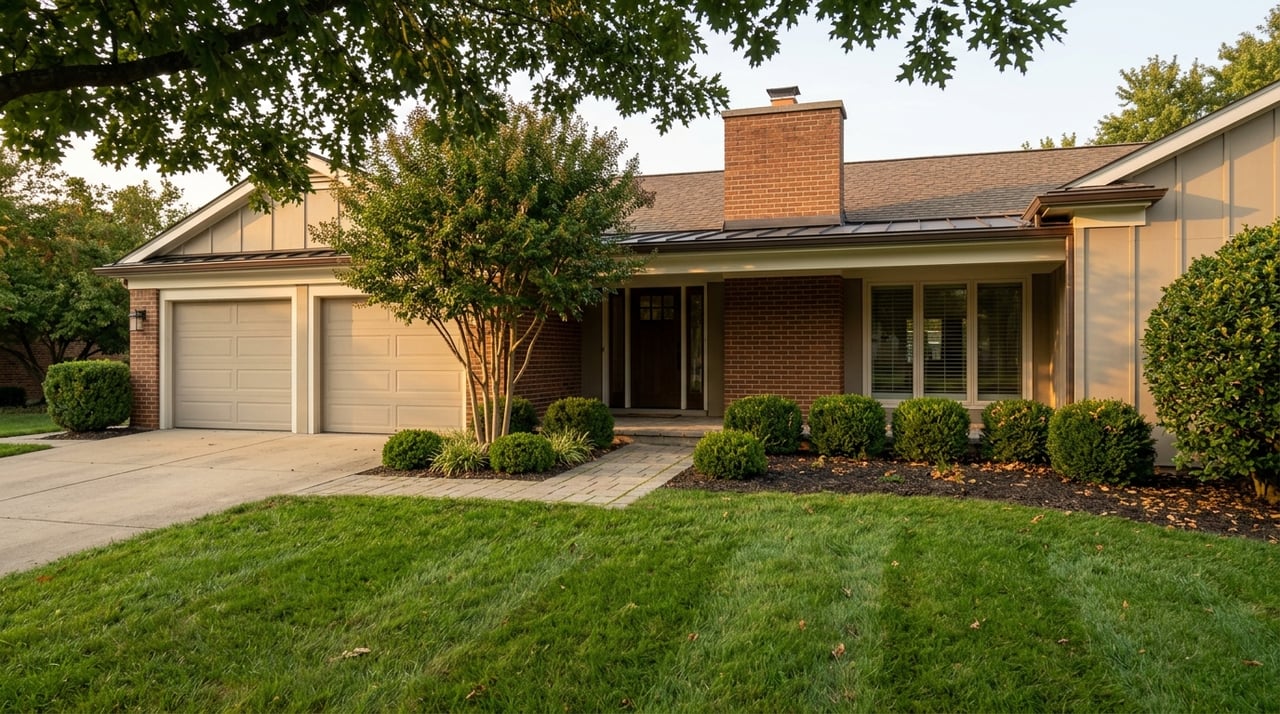
Two buyers walk into two Wake Forest homes on the same August afternoon. The first tours a resale on a quiet street off Rogers Road, listed at $499,000 after a $16,000 price cut and 58 days on market. The second walks into a D.R. Horton model at The Reserve at Prestleigh, listed at $354,990, no reduction, but the on-site agent hands them a sheet advertising a note rate of 4.99% and $7,299.57 in builder funds toward a temporary buydown. Both buyers think they are looking at the sticker price. Only one of them is.
That gap between what a home is advertised at and what it actually costs to own is the mechanic shaping Wake Forest right now. The median hides it. The portals hide it. Understanding it is the difference between a good decision and an expensive one.
The median tells you less than it used to
The headline numbers for Wake Forest look calm. Over the three months ending May 2026, the median sale price sat at $490,000, up 3.6% year over year, at $209 per square foot, with homes selling in about 38 days. Movoto's July 2026 read shows a different texture on the listing side, with a July 2026 median list price of $519,000 at $197 per square foot, down 6% year over year and a median 77 days on market. Zillow puts the typical Wake Forest home value at $509,872, down 2.7% over the past year.
Read those together and the pattern is not a hot market or a cold one. It is a market where resale sellers are competing on time and price, while a large and separate segment is quietly competing on something else.
| Segment | What the number says |
|---|---|
| Resale, trailing 3 months (Redfin, May 2026) | $490K median, 38 DOM, $209/sqft |
| Listings, list side (Movoto, July 2026) | $519K median list, 77 DOM, $197/sqft, down 6% YoY |
| New construction (Raleigh Realty, current) | Median list around $709K across 217 new-construction listings |
| Home value index (Zillow ZHVI, May 2026) | $509,872, down 2.7% YoY |
New construction is not a niche in this market. Roughly 47% of for-sale listings across Raleigh and Cary are new construction, so this is a large slice of the Wake County market. In Wake Forest specifically, there are 24 new home communities that are planned, under construction, or recently completed, including 10 townhouse communities and 20 single-family communities.
Why the builder will not cut the sticker
Ask a listing agent to reduce a resale price and, if the seller agrees, the price on the MLS drops and the neighborhood's comps drop with it. Ask a builder to do the same and something structural pushes back.
A rate buydown or a closing cost credit lets a builder advertise a lower monthly payment, which is what most buyers actually shop for, without officially reducing the price. You get a better deal, and the community keeps its value. That is why incentives stay high even when outright price cuts do not.
The builder's incentive is not generosity. It is a defense of the appraised value of every other home in the subdivision. That defense is why the sticker on a Lennar home in Rosedale or a D.R. Horton townhome in Prestleigh holds steady while the terms behind the sticker shift week to week.
What the incentive stack looks like in Wake Forest this month
The offers are specific and, for the reader who plans to compare them, worth reading closely.
At The Reserve at Prestleigh, off Jones Dairy Road, D.R. Horton is providing $7,299.57 in incentive funds to reduce monthly payments for a period of time, after which the buyer pays the full note rate of 4.99%. To receive the offer, the borrower is required to pay a 0.375% discount point. The buyer is not required to finance through DHI Mortgage to purchase the home, but must use DHIM to receive the advertised rate and buydown incentive.
Zoom out to nearby master-planned communities and the numbers get larger. Wendell Falls has offered a choice of a 3-2-1 rate buydown or up to $30,000 to use your way on select homes, and Brookfield Residential has offered up to $10,000 in closing costs plus up to $25,000 toward options.
The categories a buyer will see are not new, but the sizes are. Under Movement Mortgage's June 2026 breakdown, temporary rate buydowns are the most common type right now, because they make the monthly payment feel manageable from day one. A common version is the 2-1 buydown, in which the rate is cut by 2% in the first year and 1% in the second, then settles at the full rate in year three. Permanent rate buydowns lower the rate for the life of the loan. The builder pays points at closing to secure a reduced rate that never steps back up.
The two numbers that decide it
Every advertised offer, resale or new, resolves into two figures. If a buyer cannot state both from memory, they are not yet comparing.
- Monthly payment at the qualifying rate. Not the teaser payment in year one of a 2-1. The payment the lender uses when it decides whether to approve the loan.
- Cash to close. Down payment plus lender fees, title, escrow setup, and prepaid taxes and insurance, minus every credit the seller or builder is actually contributing.
Translate every offer into what it does to the monthly payment and how much cash it requires at closing. Those two numbers tell you more than the headline incentive ever will.
A resale seller who cuts $16,000 off a $515,000 asking price has handed the buyer roughly $80 to $90 a month in payment relief at today's rates. A builder offering a permanent buydown that shaves 75 basis points off the same loan amount is worth several times that, for as long as the buyer owns the home. A design credit worth $25,000 is worth zero on the monthly payment and, at the appraisal, worth only what the appraiser can support in comparable sales.
Where in Wake Forest each side of the trade lives
Wake Forest's map is not a single market. The trade between new construction and resale looks different depending on which corridor a buyer is standing on.
Downtown and near-downtown, walkable. The North White Street corridor has become one of northern Wake County's most active areas, with Stanley Martin's Magnolia Trace condos and several mixed-use proposals reshaping downtown. Holding Village is a walkable, amenity-rich community near downtown with new townhomes and single-family homes around a lake and park.
Mid-tier single-family and townhomes. Prestleigh and The Reserve at Prestleigh (D.R. Horton), Rosedale (Lennar, the most active developer in Wake Forest per Livabl), Forestville Station, and Grove 98. Stanley Martin builds new townhome-style condos in the Grove 98 neighborhood, a mixed-use development anchored by Wegmans with 250,000 square feet of retail, restaurants, and open spaces.
Established master-planned with resale supply. Traditions is a large master-planned community with new homes and the Del Webb at Traditions 55+ neighborhood inside it. Hasentree is a gated golf community on the east side of town with luxury new and resale homes. Heritage is a large established golf-course community that still sees new and resale activity.
Larger-lot and luxury new. Wexford Reserve, Grove 98, and Prestleigh are newer single-family subdivisions adding inventory across the Wake Forest area. Bristol Run is a new construction community spanning more than 55 acres, offering 1-2 acre wooded home sites. Rockport by Davidson Homes is opening in August 2026, with a model home grand opening on August 1.
For the buyer whose target range is $450,000 to $550,000, both a new-construction townhome and an established single-family resale are on the table. For the buyer above $700,000, the resale field thins and the choice between a Hasentree resale and a Wexford Reserve new build turns almost entirely on incentive math.
The underwriting friction most buyers learn too late
Three details from the fine print change the analysis and rarely make it into the model home conversation.
First, the qualifying rate. Most lenders qualify you at the permanent note rate, not the reduced buydown rate. A 2-1 buydown improves cash flow in year one and two. It does not raise the loan amount a buyer can be approved for.
Second, contribution limits. Temporary buydowns funded by the builder count toward interested-party contribution limits, which cap how much the seller or builder can pay on the buyer's behalf. A buyer who tries to stack a large buydown, closing cost credit, and design allowance on the same contract may run into that cap before the incentives are fully applied.
Third, the appraisal. Design credits and free upgrades can improve the day-to-day experience, but they do not always appraise dollar-for-dollar. Appraisers compare the home to recent sales and adjust for market-supported differences. A $30,000 upgrade package is not the same as $30,000 in equity.
There is one more line worth reading twice on any builder offer. Every incentive must appear in the purchase contract or a signed addendum. A flyer, a verbal promise, or a side email is not the incentive.
Ownership costs the sticker never mentions
Two Wake Forest carrying costs sit outside the incentive conversation and belong in the two-number math anyway. The combined property tax rate for a home inside town limits is roughly 0.9371 per $100 of assessed value, which includes the Fiscal Year 2026 Wake County rate of 0.5171 and the Town of Wake Forest rate of 0.420. HOA dues in the master-planned communities named above vary widely by amenity level and are worth pulling in writing before an offer, not after.
FAQ
Is a 2-1 buydown better than a price reduction of the same dollar value? Usually not, if the buyer plans to stay past year three. The buydown saves money in the first two years and then ends. A price reduction lowers the loan balance for the life of the loan and lowers property tax basis at reassessment. The exception is a buyer who expects to refinance before the buydown expires.
Can a buyer use their own agent at a new-construction community in Wake Forest? Yes, and it matters. The process is to register your agent before you tour, compare the builder's preferred-lender offer against an outside lender, read the builder contract clauses closely, and keep your own independent inspection. Site agents represent the builder.
Is now a soft market or a firm one in Wake Forest? Both, depending on which side. Resale days on market have lengthened while new-construction pricing has held with growing incentive packages behind it. The right answer for any specific buyer depends on their price band, their timeline, and whether they value monthly payment relief or long-term equity.
If you are weighing a new build against a resale in Wake Forest this fall, the answer is rarely the one on the sign in the yard. It is the one you get after the offer, the incentive sheet, and the rate lock all sit on the same page. Carolina Elite Realty Group walks buyers through that math community by community, from Prestleigh and Rosedale to Hasentree and Heritage, with a clear view of what each side of the market is really asking. Schedule Your Consultation and bring the offer that has your attention. We will translate it into the two numbers that actually decide it.