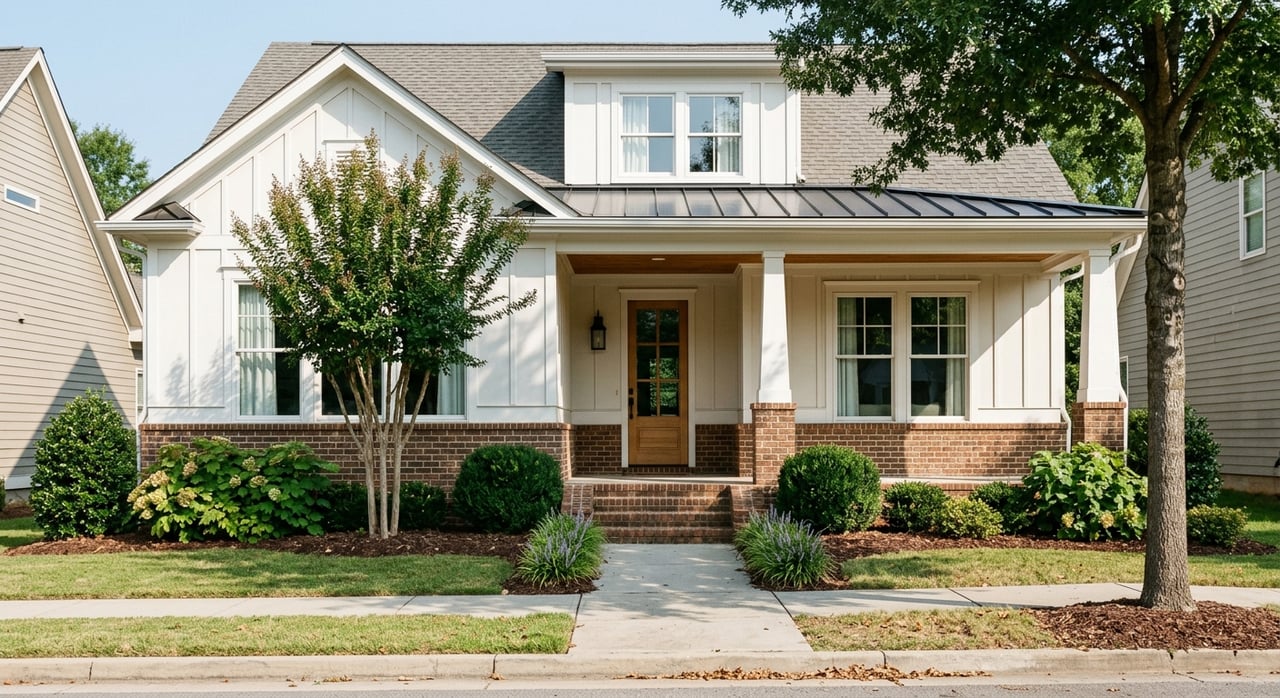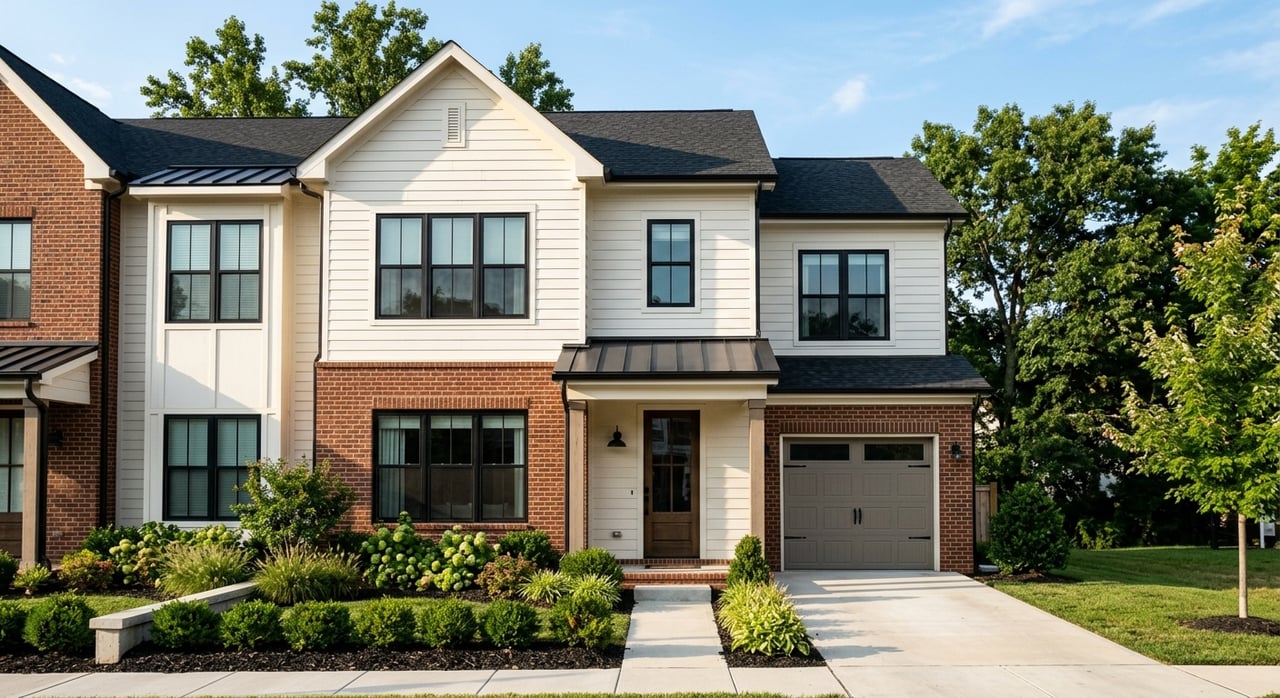
Wondering whether a townhome or a single-family home makes more sense in Wake Forest? You are not alone. Many buyers here are weighing price, maintenance, privacy, and monthly costs all at once, especially as both housing types continue to grow in the local pipeline. This guide will help you compare the real tradeoffs so you can choose the option that fits your budget and lifestyle with more confidence. Let’s dive in.
Why this choice matters in Wake Forest
Wake Forest is not a market where you only see one type of housing. The town’s January 2026 development report showed both detached and attached housing moving through the pipeline, including a 166-lot single-family project and townhome projects with 76 and 89 lots under review. That matters because buyers have real choices, not just in resale inventory but in the direction of future development too.
When both product types are active, the right answer usually comes down to how you want to live day to day. A lower purchase price may point you toward a townhome, while a need for more outdoor space or separation may point you toward a detached home. In Wake Forest, the better fit often depends on the full monthly picture and how each community is set up.
Price differences to expect
One of the clearest differences is entry price. Current listing snapshots show Wake Forest townhomes starting around $287,490, with several listings in the low-to-mid $300,000s, while the broader Wake Forest market shows a median listing home price of $550,000. For many buyers, that makes townhomes an easier first step into the market.
That lower starting point can be especially helpful if you want to keep your down payment and monthly payment more manageable. At the same time, the lower sticker price does not always mean lower overall ownership costs. You need to compare dues, utilities, taxes, and any community-level charges before deciding what is truly more affordable.
Ownership and maintenance work differently
Townhome ownership often includes shared obligations
In North Carolina planned communities, the association is responsible for common elements, while each lot owner is responsible for maintaining and repairing the lot and improvements on it. Associations can also assess owners to recover maintenance costs. In practical terms, that means townhome ownership often includes a mix of private ownership and shared responsibility.
For you, that can be a benefit or a drawback depending on your preferences. If you like the idea of shared exterior upkeep or community-maintained spaces, a townhome may feel simpler. If you want more control over your property and fewer shared rules, a detached home may feel like a better match.
Detached homes usually mean more direct control
Single-family detached homes usually come with more direct responsibility for the exterior and yard. That can mean more freedom in how you maintain your space, but it also means more work and more individual expense. The tradeoff is straightforward: more independence often comes with more hands-on upkeep.
Wake Forest also makes an important distinction here. The town says HOA regulations are separate from zoning, and the Town does not enforce HOA covenants. So if you are comparing communities, you should review the neighborhood rules carefully because they can shape your day-to-day experience as much as the home itself.
Outdoor space and privacy
Single-family homes usually offer more yard flexibility
If private outdoor space is high on your list, detached homes usually have the edge. Depending on the lot and neighborhood design, you may have more room for gardening, pets, outdoor seating, or simply more distance from neighboring homes. That added separation can be a major quality-of-life factor for some buyers.
That said, not every single-family home has a large lot, and not every townhome has minimal outdoor space. Wake Forest’s Unified Development Ordinance regulates lot size, setbacks, landscaping, parking, stormwater, and other site standards, so the layout can vary widely from one neighborhood to another.
Townhomes can pair well with a low-yard lifestyle
A townhome can make a lot of sense if you want less yard work and plan to use public amenities instead of relying on a large private yard. Wake Forest supports that lifestyle well. The town manages 561 acres of parks, open space, natural land, and trails, along with more than 50 miles of developed and undeveloped greenway trails.
Joyner Park alone offers 3 miles of paved trails, which gives many residents easy access to outdoor space without the upkeep of a larger yard. If you would rather spend your weekends walking trails than mowing grass, that can make attached living more appealing.
Monthly costs to compare closely
A smart comparison in Wake Forest goes beyond mortgage payment alone. You should look at taxes, utilities, solid waste fees, stormwater charges, and HOA dues together.
Property taxes
For FY2026, Wake County’s general fund tax rate is 51.71 cents per $100 of assessed value, and Wake Forest’s proposed FY2026-27 town rate remained at 42 cents per $100. Combined, that equals 93.71 cents per $100 of assessed value, or 0.9371%.
Using that combined rate, a $300,000 home would owe about $2,811 per year, or about $234 per month. A $550,000 home would owe about $5,154 per year, or about $430 per month. Since townhomes often enter at lower price points, taxes may also be lower, but you still want to compare the actual assessed value of each property.
Solid waste fees
Wake Forest’s current solid waste page lists a $24 monthly residential fee that includes weekly trash and recycling, weekly yard waste collection, seasonal leaf and Christmas tree pickup, scheduled bulk waste pickup, and scheduled weekly large brush collection. The town’s proposed FY2026-27 budget called for an increase to $25 per month.
Because the posted and proposed amounts differ, it is worth verifying the current fee when you are under contract. It is a small line item compared with a mortgage, but it still belongs in your monthly budget.
Electric, water, sewer, and stormwater
Wake Forest owns its electric distribution system, and the residential rate is a $25 base charge plus $0.1434 per kWh. Since the bill includes both a fixed charge and a usage charge, larger homes or more occupants may lead to higher electric bills.
Water and sewer are another separate recurring cost. Wake Forest residents in the Raleigh Water service area are billed monthly for water and sewer through Raleigh Water, so this should be treated as its own budget item and not folded into taxes.
Stormwater can be less obvious but still important. Wake Forest charges an annual stormwater utility fee based on impervious surface, with residential tiers of $44, $121, and $231. The town also says townhomes and multifamily properties with more than five units are charged under the non-residential fee structure, and condominiums are billed to the HOA or COA, so in some attached communities that cost may be handled at the community level instead of the unit level.
HOA dues can change the math
This is where many buyers need to slow down. A townhome may look less expensive at first glance, but HOA assessments can narrow or even erase some of the savings from the lower purchase price. Since associations may maintain common elements and assess owners for maintenance and repair costs, the monthly dues need to be part of your side-by-side comparison.
Ask what the dues actually cover. In one community, they may include meaningful exterior maintenance or landscaping. In another, they may be more limited while still adding a noticeable monthly cost.
Lifestyle fit often decides it
A townhome may fit you best if
- You want a lower entry price
- You prefer less yard work
- You are comfortable with shared walls or closer spacing
- You like the idea of using parks, trails, or community amenities for outdoor time
- You do not mind HOA rules if they support a lower-maintenance lifestyle
A single-family home may fit you best if
- You want more privacy or separation from neighbors
- You expect to use your own yard often
- You want more flexibility for gardening, pets, or outdoor setups
- You prefer more direct control over exterior decisions
- You are comfortable taking on more upkeep yourself
Neither option is automatically better. The right choice depends on what you value most and how you want your home to function for you every week, not just on closing day.
Questions to ask before touring
As you compare townhomes and detached homes in Wake Forest, these questions can help you see beyond the list price:
- What does the HOA fee cover?
- Is parking assigned, garage-based, or driveway-based?
- How much private yard, patio, or outdoor area comes with the home?
- What are the wall-sharing or noise-buffering conditions?
- Are there extra community-level stormwater or sanitation charges?
- Are fences, exterior colors, materials, or storage options restricted?
These details often explain why one property feels like a better fit than another. In Wake Forest, the difference is often not just townhome versus single-family. It is the full combination of lot layout, neighborhood rules, private space, and recurring costs.
How to make the best choice
If you are deciding between a townhome and a single-family home in Wake Forest, start with your lifestyle, then test the numbers. Think about how much outdoor space you truly want, how much maintenance you want to handle, and how comfortable you are with HOA structure and shared elements.
Then build a real monthly budget using taxes, utilities, solid waste, possible stormwater charges, and HOA dues. That side-by-side comparison usually makes the answer much clearer. When you line up the financial picture with your daily routine, the right option tends to stand out.
If you want help comparing specific neighborhoods or active listings in Wake Forest, Matt Bergevin can help you weigh the numbers, the lifestyle fit, and the details that are easy to miss online.
FAQs
What is the main difference between townhome and single-family living in Wake Forest?
- The biggest difference is usually the balance between price, maintenance, privacy, and control. Townhomes often have a lower entry price and more shared responsibility, while single-family homes usually offer more private outdoor space and more direct ownership responsibility.
Are townhomes usually cheaper than single-family homes in Wake Forest?
- Current listing snapshots show townhomes starting around $287,490, while the broader Wake Forest market shows a median listing home price of $550,000. That means townhomes often offer a lower entry point, but total monthly cost still depends on dues, taxes, and utilities.
Do Wake Forest townhomes always have HOA fees?
- Many townhomes in planned communities have associations that maintain common elements and may assess owners for maintenance and repair costs. You should always confirm whether there is an HOA, what the dues are, and what those dues cover.
How much are property taxes in Wake Forest, NC?
- Using the FY2026 Wake County rate and the proposed FY2026-27 Wake Forest town rate, the combined tax rate is 93.71 cents per $100 of assessed value, or 0.9371%.
Is a single-family home better for outdoor space in Wake Forest?
- In general, detached homes usually offer more yard flexibility and separation, but actual outdoor space varies by neighborhood and lot design. Wake Forest’s development standards shape lot size, setbacks, landscaping, and parking, so you should compare each property individually.
Does Wake Forest have good parks and trails for townhome owners?
- Yes. Wake Forest manages 561 acres of parks, open space, natural land, and trails, and the town lists more than 50 miles of developed and undeveloped greenway trails. That public outdoor network can be a strong benefit if you prefer less private yard maintenance.