Sooner or later, a golf ball finds a window along the fairways in Heritage. Nobody keeps an official count, but ask around the neighborhood and you will hear about it eventually. What most homeowners in that situation do not realize until they are standing over broken glass is that the outcome was mostly decided years earlier, when the lot was platted and the deed was recorded. The club dues, the membership tier, whether you have ever picked up a club in your life. None of that matters nearly as much as one clause you almost certainly never read.
That clause is the golf ball easement, and it is the single biggest piece of fine print a fairway buyer in Heritage signs without discussing.
What the Easement Actually Says
Golf course communities record a specific kind of easement against every lot that borders the fairways. It grants golfers, caddies, and the club's own staff the right to walk onto your property to retrieve a stray ball. It does not, on its own, excuse the golfer who hit it from responsibility for the window it broke. What it usually does is protect everyone else in the chain: the developer, the golf course operator, the builder. The homeowners association is rarely on the hook either, because the easement exists precisely so the association is not liable every time someone slices a drive.
Translated into plain language, this is roughly what a golf-course lot's recorded declaration is designed to communicate to a new owner:
You accept that balls will land on your property. Golfers and course staff can come onto your lot to get them. If a ball damages your home, your recourse is against the person who hit it, not against the course, the builder, or the community as a whole.
That is a property right transferring at closing, not a marketing footnote. North Carolina's standard seller disclosure form, the Residential Property and Owners' Association Disclosure Statement, asks sellers directly whether the property carries easements or encroachments involving adjacent land, separate from the section on HOA dues and covenants. A golf course easement belongs in that answer. In practice, a lot of sellers check the HOA box and stop there, because they think of the golf course as an amenity rather than a recorded burden on the title.
Who Pays When the Drive Goes Wrong
Here is where the story gets less comfortable for the homeowner. North Carolina courts have addressed golf ball liability directly, most notably in McWilliams v. Parham, and the standard that emerged puts the burden of ordinary care on the person swinging the club. But that same line of reasoning cuts against the homeowner too: a golfer is generally not liable for hitting someone, or something, situated in a spot where the danger from an errant shot could reasonably be anticipated.
A house sitting along an active fairway is, almost by definition, a place where that danger is foreseeable. So when a homeowner in that position tries to collect from the golfer who broke their window, they are working against a legal presumption that they accepted the risk the moment they bought the lot.
In practice, most of these incidents never reach a courtroom or an insurance adjuster at all. The homeowner sweeps up the glass, calls the club to report it as a courtesy, and pays for the repair out of pocket, because the deductible on a homeowners policy usually costs more than the window. Filing a claim does technically give the insurer subrogation rights against the golfer, but chasing an anonymous player over a few hundred dollars of glass rarely happens. The practical result is that the person who owns the lot absorbs the cost almost every time, regardless of what the deed says about who is theoretically responsible.
The Membership Question Nobody Connects to the Easement
This is the part that surprises buyers most: none of this depends on whether you actually belong to Heritage Golf Club.
The club is semi-private, designed by Robert W. Moore Jr. and opened in 2001, and it is managed today by GreatLife Golf LLC. Membership is elective, not mandatory for lot owners, and it runs across several tiers. Full golf, sports, social, and family memberships each carry their own initiation cost, reported anywhere from no fee up to roughly $2,500, with annual dues ranging from nothing up to about $5,000 depending on the tier and how much course access comes with it. The clubhouse restaurant, 1250 Heritage, is open to the public for lunch daily and dinner Friday and Saturday, so you do not even need a membership to eat there.
You can own a home on that 14th fairway, never sign a membership application, never set foot on the course, and the easement still runs with your lot. The right to enjoy the golf course is optional. The exposure that comes with living next to it is not. Buyers who assume that paying club dues somehow buys them out of the risk, or that skipping membership means skipping the exposure, have the relationship backwards. The two are unconnected line items on the same property.
What the Listings Already Tell You
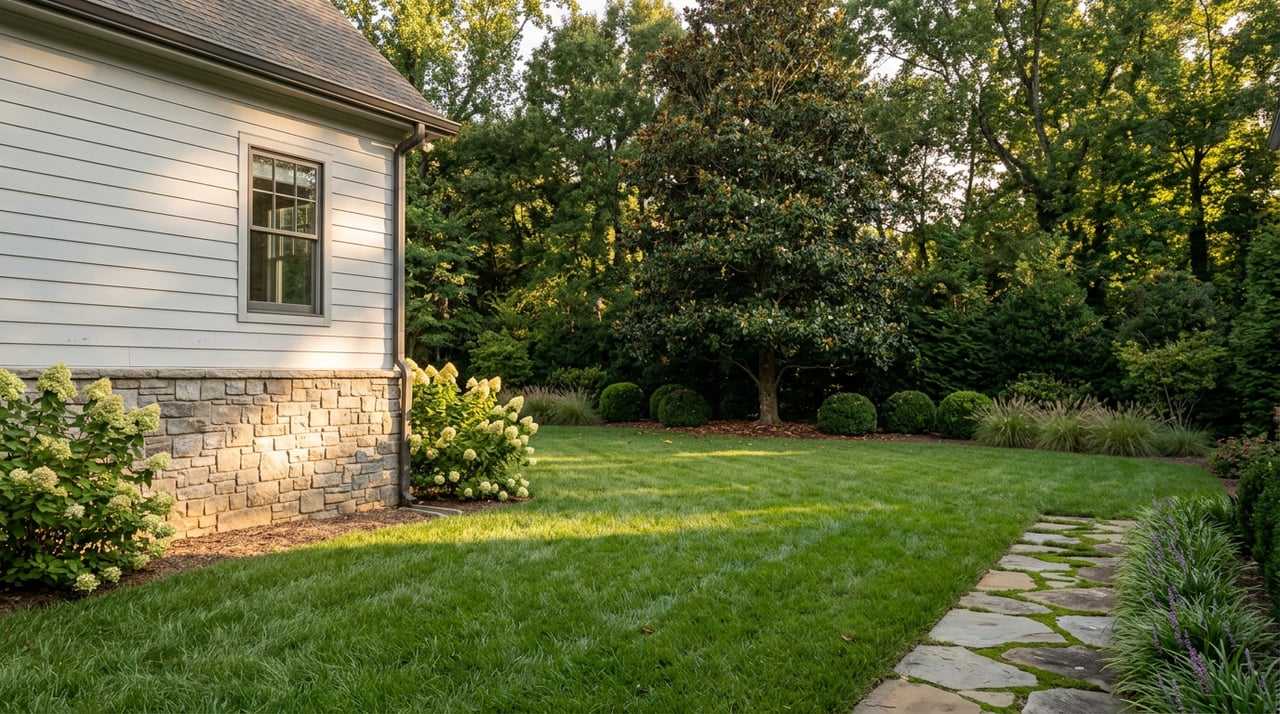
Agents in Heritage already price this risk into how they describe fairway lots, even when they never use the word easement. Listings for homes along the golf course routinely call out the tree line between the house and the fairway, describing mature trees as a buffer that shelters the home from stray shots. That kind of language is not decoration. It is a signal that the seller and their agent know the shot corridor matters, and that a thick tree buffer is worth mentioning because a thin one would be worth asking about.
If you are shopping a fairway lot in Heritage, that buffer deserves the same scrutiny as a foundation crack. Ask which hole faces the property, which direction play moves across it, and whether there is documented history of ball strikes on that lot or the ones immediately next to it. None of that shows up on a standard walkthrough.
Six Things to Get in Writing Before You Close
- Ask the seller to specifically address the golf course easement in their disclosure statement answer, not just the general HOA covenants question.
- Request any record of prior ball-strike damage or repairs on the property, and ask directly whether the seller has ever filed an insurance claim for it.
- Confirm which hole and fairway face the lot, and whether the shot corridor runs toward or away from the house.
- Call your homeowners insurer before closing and ask plainly whether golf ball damage to windows or siding is covered under standard dwelling coverage or requires something additional.
- Understand that club membership tier and dues have no bearing on the easement. Skipping membership does not reduce your exposure, and joining does not increase your legal protection.
- If the tree buffer between the lot and the fairway looks thin, ask the seller or the club whether netting or additional screening has ever been discussed for that stretch of the course.
None of this makes a fairway lot a bad purchase. Many buyers in Heritage value the view and the quiet more than they mind an occasional stray ball, and most of these lots sell without incident for years at a time. The point is not to avoid the golf course. It is to walk into the purchase knowing exactly what the deed already decided on your behalf.
FAQ
Does homeowners insurance typically cover golf ball damage in Heritage? Most standard dwelling policies will cover the repair, but the insurer may pursue subrogation against the golfer afterward, and the claim rarely exceeds the deductible in the first place. Confirm the specifics with your own carrier rather than assuming coverage.
Do all lots in Heritage carry this easement, or only ones that touch the course? The easement applies to lots that border the golf course itself. A townhome or single-family lot elsewhere in the broader Heritage community, away from the fairways, is not subject to the same recorded burden.
Is joining Heritage Golf Club required if I buy a fairway lot? No. Membership is elective and separate from lot ownership. You can decline every membership tier and still own a home that carries the golf ball easement, since the easement attaches to the land rather than to club participation.
If you are weighing a fairway lot in Heritage, or trying to figure out what a specific address's disclosure statement should actually say, Matt Bergevin can walk through the recorded documents with you before you write an offer. Schedule Your Consultation and get the fine print explained in plain terms before it becomes your fine print.