If you are thinking about buying rental property in Wake Forest, you are probably asking the right long-term question: Will this market still make sense years from now? That is exactly where a smart investment strategy starts. Wake Forest offers a mix of population growth, strong household income, owner-occupied stability, and access to major job centers that makes it worth a serious look for buy-and-hold buyers. The key is knowing what to buy, what to watch, and how to underwrite the numbers carefully. Let’s dive in.
Why Wake Forest stands out
Wake Forest has several traits that tend to matter in a long-term real estate market. According to the U.S. Census QuickFacts for Wake Forest, the town grew from 47,601 residents in 2020 to an estimated 56,764 in 2024. The same source reports a median household income of $123,802, a bachelor’s degree attainment rate of 59.5%, and an owner-occupied housing rate of 74.0%.
That combination matters because it points to durable housing demand. In simple terms, you are looking at a growing town with relatively high incomes and a housing base that is still primarily owner-occupied rather than heavily investor-saturated. For long-term investors, that can support both resale demand and rental demand over time.
Long-term growth drivers
Population and income growth
Population growth is one of the clearest reasons investors look at Wake Forest. More residents can mean more demand for housing, especially when that growth is paired with strong local income levels. The town’s household income and education profile suggest a buyer and renter base with meaningful spending power.
This does not guarantee future appreciation, but it does help explain why Wake Forest stays on the radar for buyers who want long-term upside rather than just short-term cash flow. Markets with strong demographics often attract both owner-occupants and renters looking for stability and convenience.
Strong municipal footing
Wake Forest also benefits from solid local finances. The town’s FY 2025-26 budget announcement kept the municipal property tax rate at $0.42 per $100 of assessed value, and the town reported a triple-A credit profile.
That same budget update notes that the town’s tax base grew 47% to $11.7 billion in fiscal 2025 from $8.0 billion in fiscal 2024. For investors, that is a useful signal of local growth and fiscal strength. It is not a promise of returns, but it does support the idea that Wake Forest is operating from a position of momentum.
Access to Triangle jobs
Wake Forest is not an isolated market. It benefits from its connection to the broader Triangle economy, which supports long-term housing demand from commuters and relocating households.
The Census reports a mean commute time of 30.9 minutes for Wake Forest residents, and Wake County recorded 556,250 total jobs in 2023 with 4.8% employment growth from 2022 to 2023. Research Triangle Park also remains a major regional employment engine, with 250-plus businesses across its 7,000-acre footprint. That regional access helps support demand from people who want suburban housing while staying connected to Raleigh and RTP.
What drives rental demand
Wake Forest appeals to a broad range of residents, and that matters if you are buying with future tenants in mind. The town’s age profile includes 26.5% of residents under 18, the average household size is 2.81, and 96.4% of adults have at least a high school diploma, according to the Census town profile.
Those numbers help explain why the town often attracts households looking for space, convenience, and a suburban setting. The town also highlights parks, community amenities, and a greenway network that totals 15.5 miles as part of its overall quality-of-life and transportation story. For investors, that suggests demand is often tied to lifestyle and livability as much as raw commute math.
Transportation projects to watch
Transportation improvements are worth following, especially if your timeline is five to ten years or longer. Wake Forest’s Go Wake Forest microtransit service serves residents and visitors within town limits and part of Wakefield.
The town also received a $13.2 million federal grant in January 2025 to build a mobility hub that will serve the planned S-Line passenger rail service starting in 2030. It is best to think of this as a long-term access and convenience story, not as a guaranteed value jump. Still, public investment in mobility can be a meaningful part of a market’s long-range appeal.
Best property types for investors
In Wake Forest, the most practical long-term hold options are usually single-family homes, townhomes, and some low-maintenance condos or infill opportunities. The Redfin Wake Forest housing market page tracks activity across all home types, including single-family homes, townhouses, and condos, which reflects the range of inventory investors are likely to consider.
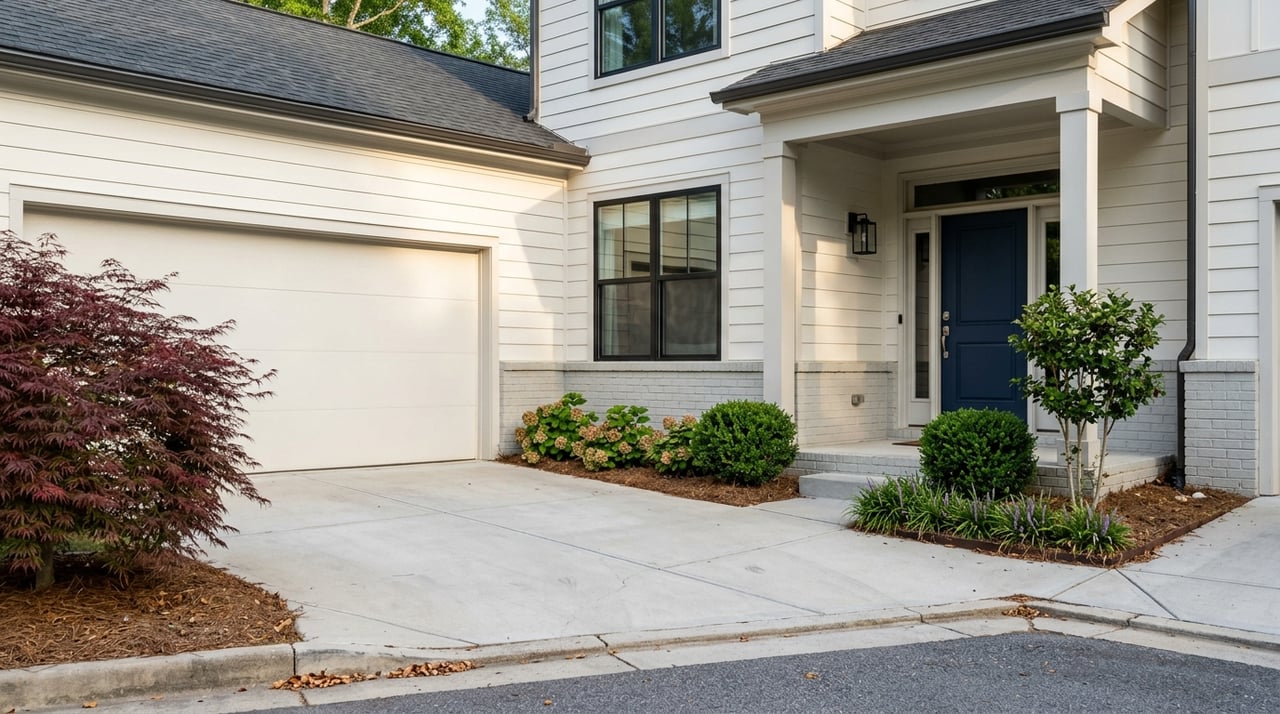
For many buyers, single-family homes and townhomes are the clearest fit. They line up with the town’s suburban demand profile and can appeal to both owner-occupants and renters looking for more space. If your goal is flexibility at resale, those property types often deserve the closest look.
Downtown and historic opportunities
Downtown and historic-area properties can also be attractive, especially for buyers who value character, walkability, and proximity to local shops and events. The town describes downtown Wake Forest as a vibrant historic district and recognizes its historic district as a distinct local asset.
That said, these properties usually require a more careful lens. Older homes may come with renovation needs, aging systems, and design or preservation considerations that newer suburban homes may not. The long-term appeal can be real, but so can the maintenance risk.
How to evaluate a deal
A Wake Forest investment property should be evaluated with local comps, realistic rent assumptions, and a full carrying-cost model. This is especially important because public market data can vary depending on the source.
For example, Redfin reported a March 2026 median sale price of $454,000 and 57 days on market, while Zillow reported a $512,161 average home value, a $515,792 median sale price, and 37 days to pending in late March 2026. Realtor.com described Wake Forest as a seller’s market in February 2026, with 655 homes for sale and 292 rentals. These differences are normal, which is why property-specific analysis matters more than any single portal estimate.
Understand the rental range
Rental pricing in Wake Forest also varies by source, so it is smartest to think of the town as a mid-$1,000s rental market and then verify by property type and area. Redfin reported an average rent of $1,494 in August 2025, Apartments.com reported $1,392 in April 2026, Realtor.com reported a median rent around $1.7K in February 2026, and Zillow Rental Manager reported $2,012.
That spread is a good reminder not to build your investment model around one average number. A newer townhome, an older single-family home, and a property in a more central location may all perform differently. If you are buying seriously, local rent comps should drive your decision.
Model all carrying costs
Carrying costs can make or break the deal. Based on the town’s FY 2025-26 budget details, investors should account for the municipal tax rate of $0.42 per $100 of assessed value, the downtown municipal service district tax of $0.14 per $100 where applicable, a $24 monthly residential solid waste fee, and a 3% increase in residential energy charges scheduled for September 1, 2025.
You will also want to budget for HOA dues, insurance, maintenance, turnover, utilities where applicable, and vacancy. Appreciation can be part of the long-term strategy, but it should not be the only reason the numbers work.
Stress test cash flow
Wake Forest can be a strong long-term hold market, but it is not a market where you should assume easy cash flow. The Census reports a median owner-occupied home value of $474,500 and a median gross rent of $1,596 in Wake Forest. Those figures suggest buyers should be cautious about rent-to-price assumptions and underwrite conservatively.
That does not make Wake Forest a bad investment market. It simply means your strategy may lean more toward long-term appreciation, tenant quality, and resale liquidity than high immediate yield. A disciplined approach matters here.
A smart long-term strategy
If you are investing in Wake Forest for long-term growth, the strongest approach is usually simple and disciplined. Focus on property types with broad appeal, use current sales and rental comps, and keep your expense assumptions realistic.
A few priorities can help:
- Target single-family homes or townhomes with strong resale flexibility
- Look closely at commute access, amenities, and overall convenience
- Treat rental estimates as property-specific, not market-wide guarantees
- Budget for taxes, utilities, HOA costs, maintenance, and vacancy from day one
- Watch public investment trends like downtown redevelopment, greenways, and the future mobility hub
Why local guidance matters
Wake Forest offers a compelling long-term story, but good investing still comes down to property selection and execution. The right home in the right part of town can look very different from an average listing on a search portal.
That is where local guidance helps. If you want to compare neighborhoods, pressure-test rent assumptions, or identify homes with the best long-term hold potential, Matt Bergevin can help you evaluate Wake Forest opportunities with a practical, data-informed approach.
FAQs
What makes Wake Forest attractive for long-term real estate investing?
- Wake Forest has strong population growth, high household income, a 74.0% owner-occupied housing rate, access to Raleigh and Research Triangle Park job centers, and public investment that supports long-term demand.
What property types make the most sense in Wake Forest for buy-and-hold investors?
- Single-family homes and townhomes are often the most practical options because they match Wake Forest’s suburban demand profile and usually offer broad appeal for both renters and future buyers.
What should you expect from the Wake Forest rental market?
- Wake Forest is best described as a mid-$1,000s rental market, but exact rents vary by source, property type, condition, and location, so local comps matter.
What local costs should you include when buying an investment property in Wake Forest?
- You should model municipal property taxes, any applicable district taxes, solid waste fees, utilities, HOA dues, maintenance, insurance, turnover costs, and vacancy.
What future Wake Forest projects should long-term investors watch?
- Publicly documented projects worth tracking include the future S-Line mobility hub, transportation updates, greenway expansion, and ongoing downtown redevelopment.